
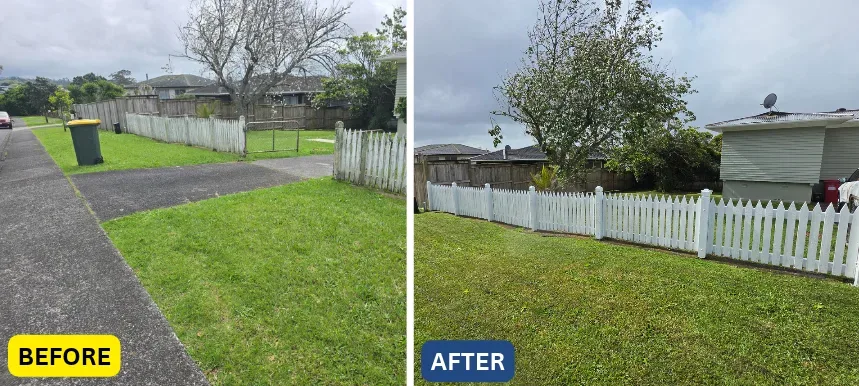
A tired, algae-covered picket fence doesn't always need replacing. Sometimes, a thorough clean and a fresh coat of paint are all it takes to bring it back to life.
Our team recently completed a fence restoration in Oratia, West Auckland, helping a homeowner refresh their existing picket fence without stretching their budget. The fence surrounding their property had developed a noticeable build-up of algae and was looking overdue for some attention.
Rather than jumping straight into an expensive replacement, we talked through a few options and helped the customer choose a practical solution: pressure washing the entire fence line, followed by two coats of paint.
We got started the next day and had the whole job completed in just one and a half days.
With over 20 years of experience in property maintenance across New Zealand, we've learnt that a straightforward approach often delivers the best result. This Oratia project was a good example of that.
Project Overview
Location: Oratia, West Auckland
Property Type: Residential
Service: Fence restoration, pressure washing and repainting
Fence Type: Existing timber picket fence
Condition: Algae-covered and in need of refreshing
Project Duration: 1.5 days
Outcome: Cleaned and repainted fence, with a very happy customer
The homeowner first gave us a call to ask about getting their existing picket fence refreshed.
They wanted to improve the appearance of the fence surrounding their property but needed a solution that worked within their budget.
To get things moving, they emailed us photos of the fence so we could understand its condition and provide suitable options.
We put together a few quotes outlining different approaches. After reviewing them, the customer decided that pressure washing and repainting offered the best balance between cost and appearance.
It meant keeping their existing fence and giving it a much-needed refresh rather than paying for a bigger project.
This is something we often discuss with homeowners. If a timber fence is still structurally sound, cleaning and repainting may be a sensible option before considering replacement.
For fences needing more extensive attention, we also provide timber fencing and fence repair services across Auckland.
Scope of Work
Once the customer accepted our quote, we arranged to attend the property the following day.
The agreed scope was simple but thorough: clean the existing fence properly and give it a fresh painted finish.
Our work involved:
- Pressure washing the entire fence line: Removing the visible algae and accumulated grime from the timber surfaces.
- Cleaning both sides: Making sure the refresh wasn't limited to the side facing the street or driveway.
- Cleaning between the pickets: Paying attention to the narrow gaps where dirt and algae can easily be missed.
- Applying two coats of paint: Refreshing the appearance of the existing fence with a consistent painted finish.
- Completing the work within 1.5 days: Keeping the project manageable and avoiding a lengthy maintenance job.
Because the fence had individual pickets, cleaning between the gaps was an important part of the work. It's easy to focus on the large, visible surfaces, but those smaller spaces make a real difference to the overall finish.
Our professional painting services cover exterior maintenance and repainting, including the preparation needed to achieve a tidy result.
Challenges Overcome
Finding a solution that suited the customer's budget
The biggest consideration on this job was cost.
The customer wanted their fence looking better, but they also had a clear budget to work within.
We didn't want to push them towards unnecessary work. Instead, we offered a few options and gave them the chance to decide what made the most sense.
They chose to clean and repaint their existing picket fence.
That decision allowed us to focus on improving its appearance without the additional work and cost associated with replacing the fence.
It's a useful reminder that property maintenance doesn't always need to involve major renovations.
Tackling the algae build-up
One of the main issues was the algae covering the fence.
With Auckland's damp conditions, exterior timber can develop green growth over time, particularly in shaded areas or places that stay wet for longer.
A quick rinse often isn't enough to achieve a uniform result.
We pressure washed the whole fence line, including both sides and the gaps between the individual pickets.
For property owners planning similar work, it's important to use an appropriate washing method for the timber and existing coating. Excessive pressure can damage wood, while uncontrolled wash-water can carry contaminants into drains.
Auckland Council's guidance on pressure washing and waterblasting explains why wash-water containing algae, dirt and paint residue must be kept out of stormwater systems.
Getting an even finish across the pickets
Picket fences have more edges and narrow gaps than many solid timber fences.
That means there are plenty of places where old grime can remain or paint coverage can become uneven.
By washing the fence on both sides and between the pickets before applying two coats of paint, we tackled the areas that could otherwise make the finished job look patchy.
Project Execution
We kept the process straightforward, from the first phone call through to the completed repaint.
Step 1: Job Evaluation — Photos, options and a clear quote
The customer initially contacted us by phone, then emailed photos of their existing fence.
Those photos helped us understand what they wanted done and put together several quote options.
We outlined the available approaches so they could compare them before committing.
For this customer, pressure washing and repainting was the option that suited their budget.
When comparing property maintenance quotes, we always recommend checking exactly what's included. The government's Consumer Protection guidance on quotes and estimates explains why a clear written scope matters.
Step 2: Work Begins — A full fence wash and repaint
After the customer accepted our quote, we attended the property the next day.
The first part of the job involved pressure washing the entire fence line.
We worked across both sides of the fence, paying attention to the spaces between the pickets where algae and grime had built up.
Once the cleaning stage was complete, the next task was repainting.
We applied two coats of paint to refresh the fence's appearance and give the existing timber a tidy, consistent look.
Doing the work in the right order matters. Painting over algae or loose contaminants can compromise the finish, so effective cleaning is an essential part of a fence restoration.
For homeowners maintaining exterior timber, Auckland Council's advice on preventing paint pollution also offers practical guidance on handling paint waste responsibly.
Step 3: Completion Check — A refreshed fence in 1.5 days
The entire job took us just one and a half days to complete.
By the end, the customer had a freshly washed and repainted picket fence, without needing to replace the existing structure.
The two coats of paint gave the fence a renewed appearance, while the thorough cleaning addressed the visible algae that had been making it look tired.
For a relatively small maintenance project, it made a noticeable difference to how the fence presented around the property.
Client Experience
One of the most satisfying parts of this project was seeing the customer's reaction.
They had started with a fence that was covered in algae and needed attention. They also wanted to keep costs manageable.
By providing several quote options, we gave them the flexibility to choose an approach that worked for their circumstances.
Once they'd made their decision, we were able to get started the following day and complete the job in just 1.5 days.
The customer was very happy with the finished result.
That's the outcome we want from a project like this. Not a complicated process or unnecessary extras, just a practical solution that makes a visible difference.
The refreshed fence improved the presentation of their property while allowing them to keep the picket design they already had.
Final Thoughts
This fence restoration in Oratia shows what can be achieved with a bit of attention to an existing timber fence.
The customer didn't need a completely new fence to get the fresh look they wanted. A thorough pressure wash and two coats of paint gave their algae-covered picket fence a new lease on life.
And with the entire job completed in just one and a half days, it was a relatively quick improvement to their property.
For homeowners across West Auckland and the wider Auckland region, we'd always suggest checking the condition of your existing fence before deciding whether to repair, repaint or replace it.
If the posts, rails and pickets are in reasonable condition, restoration could be worth considering. If the timber is rotten, unstable or badly damaged, repairs or replacement may be the better investment.
We can help you work through those options. Our fencing specialists and painting team can advise on an approach suited to your property.
Got a tired-looking fence that needs some attention?
Give us a call on 0800 514 514, or request a free, no-obligation quote.
Send us a few photos of your fence, tell us what you'd like to achieve, and we'll help you work out a practical next step.
FAQ
1. Can an old picket fence be restored instead of replaced?
Yes, provided the existing timber and supporting structure are in suitable condition. We can often improve the appearance of an older picket fence through cleaning and repainting. However, if there are rotten posts, broken rails or significant structural problems, additional repairs or replacement may be necessary. We recommend checking the condition of the fence before deciding which approach offers better value.
2. How much does fence pressure washing and repainting cost in Auckland?
The cost depends on the fence length, height, condition, accessibility and amount of preparation required. Paint choice and the number of coats also affect the price. We provided several quote options for this Oratia customer, who selected the one within their budget. We can provide a tailored NZD quote once we have enough information about your fence.
3. How long does it take to pressure wash and repaint a picket fence?
Our Oratia project took just 1.5 days, including pressure washing the whole fence line and applying two coats of paint. Other projects may take longer depending on fence size, weather, preparation and coating requirements. We also need to allow suitable drying and recoating conditions. We assess these factors when planning the work rather than promising the same turnaround for every property.
4. Why should algae be removed before painting a timber fence?
Algae, dirt and other contaminants can interfere with paint adhesion and leave an uneven finish. We recommend preparing the surface properly before applying a new coating. On this Oratia job, we pressure washed both sides of the picket fence, including between the gaps, before repainting. Depending on the existing coating and timber condition, other preparation may also be needed.
5. Is pressure washing safe for timber picket fences?
Pressure washing can be suitable for timber fences when the equipment and cleaning technique are appropriate for the surface. Too much pressure can damage the timber or strip existing coatings unintentionally. We recommend checking for loose pickets, weakened timber and deteriorating paint before starting. If the fence is particularly fragile, a gentler cleaning method may be more appropriate.
6. Can you provide a quote for fence restoration from photos?
Yes, photos are a useful starting point. In fact, that's how this Oratia project began. The customer called us, emailed photos and received several quote options to consider. We recommend sending clear pictures of the full fence line, along with close-ups of any damaged or algae-covered sections. If more information or a site assessment is needed to confirm the scope, we'll explain that before finalising the quote.